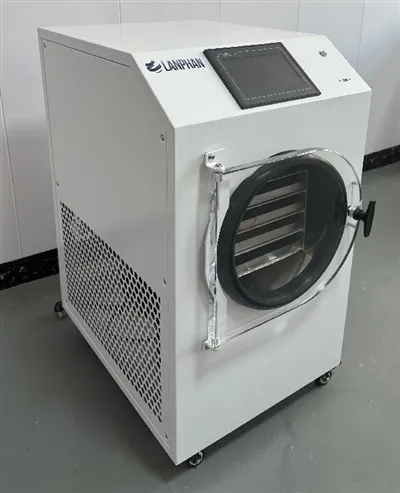
Can a freeze dry fruit machine remove all the moisture from fruits?
As a supplier of freeze dry fruit machines, I often encounter questions from customers about the capabilities of our products. One of the most common inquiries is whether a freeze dry fruit machine can completely remove all the moisture from fruits. In this blog post, I will delve into the science behind freeze-drying, the factors that affect moisture removal, and the limitations of the process.
The Science of Freeze-Drying
Freeze-drying, also known as lyophilization, is a process that involves freezing the product and then removing the ice by sublimation. Sublimation is the direct transition of a substance from the solid phase to the gas phase without passing through the liquid phase. In the context of freeze-drying fruits, the process begins by freezing the fruits at extremely low temperatures, typically below -40°C (-40°F). This freezing step solidifies the water within the fruits, turning it into ice.
Once the fruits are frozen, the freeze dry fruit machine creates a vacuum environment inside the chamber. The low pressure in the vacuum causes the ice to sublimate, meaning it changes directly from a solid to a gas. This process effectively removes the water from the fruits without causing them to go through a liquid phase, which helps to preserve the structure, flavor, and nutritional value of the fruits.
Factors Affecting Moisture Removal
While freeze-drying is an effective method for removing moisture from fruits, it is important to note that it may not be possible to remove all the moisture completely. Several factors can influence the extent of moisture removal during the freeze-drying process:
- Fruit Composition: Different fruits have varying water contents and compositions. Fruits with a high water content, such as watermelon or strawberries, may be more challenging to completely dry compared to fruits with a lower water content, such as apples or bananas. Additionally, the presence of other substances in the fruits, such as sugars, acids, and fibers, can affect the sublimation process and the ability to remove all the moisture.
- Freezing Rate: The rate at which the fruits are frozen can impact the quality of the freeze-drying process. Rapid freezing helps to form small ice crystals, which are more easily sublimated. Slow freezing, on the other hand, can result in larger ice crystals, which may require more time and energy to remove. Therefore, it is important to ensure that the fruits are frozen quickly to achieve optimal moisture removal.
- Vacuum Level: The vacuum level inside the freeze dry fruit machine plays a crucial role in the sublimation process. A higher vacuum level reduces the pressure, which promotes faster sublimation of the ice. However, achieving and maintaining a high vacuum level can be challenging and may require specialized equipment. Additionally, the vacuum level needs to be carefully controlled to prevent the fruits from collapsing or being damaged during the process.
- Drying Time: The duration of the freeze-drying process also affects the amount of moisture that can be removed from the fruits. Longer drying times generally result in more complete moisture removal, but they also increase the energy consumption and the cost of the process. Therefore, it is important to find a balance between the drying time and the desired level of moisture removal.
Limitations of Freeze-Drying
Despite its many advantages, freeze-drying has some limitations when it comes to completely removing all the moisture from fruits:
- Residual Moisture: Even after the freeze-drying process, there may be a small amount of residual moisture left in the fruits. This residual moisture is typically in the range of 1-5%, depending on the fruit and the freeze-drying conditions. While this level of moisture is generally low enough to prevent spoilage and extend the shelf life of the fruits, it may not be completely dry.
- Surface Moisture: In some cases, the surface of the fruits may retain a small amount of moisture even after the freeze-drying process. This surface moisture can be caused by factors such as condensation or incomplete sublimation. To address this issue, additional drying steps or surface treatments may be required.
- Cost and Time: Freeze-drying is a relatively expensive and time-consuming process compared to other drying methods. The equipment required for freeze-drying is costly, and the process itself can take several hours or even days to complete. Therefore, it may not be suitable for large-scale production or for applications where cost and time are critical factors.
Our Freeze Dry Fruit Machines
At our company, we offer a range of freeze dry fruit machines that are designed to provide efficient and effective moisture removal from fruits. Our machines are equipped with advanced technology and features to ensure optimal performance and high-quality results.
One of our popular products is the Freeze Dryer Machine for Home Use Food. This machine is specifically designed for home use and is suitable for drying a variety of fruits, vegetables, and other foods. It is easy to operate and offers a convenient way to preserve the freshness and nutritional value of your favorite foods.
If you are looking for a smaller and more compact option, we also offer the Small Home Freeze Dryer Machine. This machine is ideal for those with limited space or for those who only need to dry small quantities of fruits. It is still capable of providing excellent results and is a great choice for home use.
For those who are interested in drying meat, we have the Home Freeze Dryer Machine for Meat. This machine is specifically designed to handle the unique requirements of drying meat and can help to preserve its flavor, texture, and nutritional value.

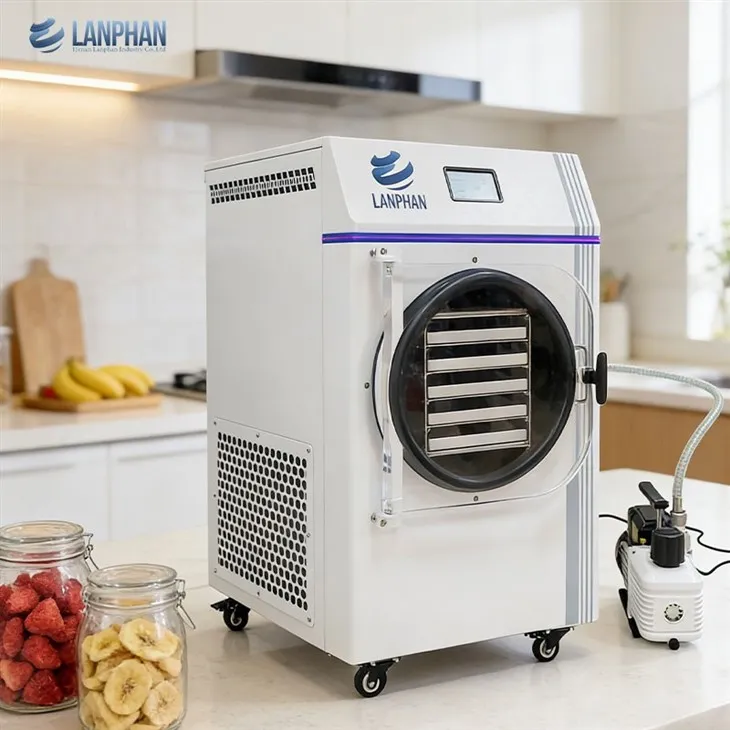
If you are looking for a portable and versatile option, our Mini Freeze Dryer Machine is a great choice. This machine is small and lightweight, making it easy to transport and use anywhere. It is also suitable for drying a variety of fruits, vegetables, and other foods.
Finally, our Freeze Dryer Machine for Home is a comprehensive solution for home use. It offers a large capacity and a range of features to ensure efficient and effective moisture removal from fruits and other foods.
Contact Us for Procurement
If you are interested in purchasing a freeze dry fruit machine or have any questions about our products, please feel free to contact us. Our team of experts is available to provide you with detailed information and guidance to help you choose the right machine for your needs. We look forward to working with you and helping you achieve the best results with your freeze-drying projects.
References
- King, C. J. (1978). Freeze Drying. In Encyclopedia of Chemical Technology (Vol. 11, pp. 910-935). John Wiley & Sons, Inc.
- Lyophilization: Introduction and Basic Principles. (n.d.). Retrieved from https://www.thermofisher.com/us/en/home/life-science/lab-equipment/freeze-dryers/lyophilization-introduction-basic-principles.html
- Freeze Drying of Fruits and Vegetables: A Review. (2015). Journal of Food Processing and Preservation, 39(6), 2116-2126. doi:10.1111/jfpp.12330