How to choose a suitable lab spray dryer?
As a supplier of lab spray dryers, I understand the importance of selecting the right equipment for your specific needs. A lab spray dryer is a crucial tool in many industries, including pharmaceuticals, food, and chemical engineering. It allows you to transform liquid materials into dry powders, which can be further processed or used directly. In this blog post, I will share some key factors to consider when choosing a suitable lab spray dryer.
1. Capacity and Throughput
The first thing to consider is the capacity and throughput of the lab spray dryer. This will depend on the volume of material you need to process and the frequency of use. If you are working on small-scale research projects or producing samples, a smaller capacity dryer may be sufficient. On the other hand, if you are involved in large-scale production or need to process a high volume of material, you will require a dryer with a higher throughput.
Our company offers a range of lab spray dryers with different capacities and throughputs. For example, our Laboratory Spray Dryer is suitable for small-scale research and development, with a capacity of up to 2 liters per hour. If you need a higher throughput, our Pilot Scale Spray Dryer can handle up to 10 liters per hour, making it ideal for pilot production and scale-up studies.
2. Drying Technology
There are several types of drying technologies available in lab spray dryers, including hot air drying, freeze drying, and microwave drying. Each technology has its own advantages and disadvantages, and the choice will depend on the properties of the material you are drying and the desired end product.
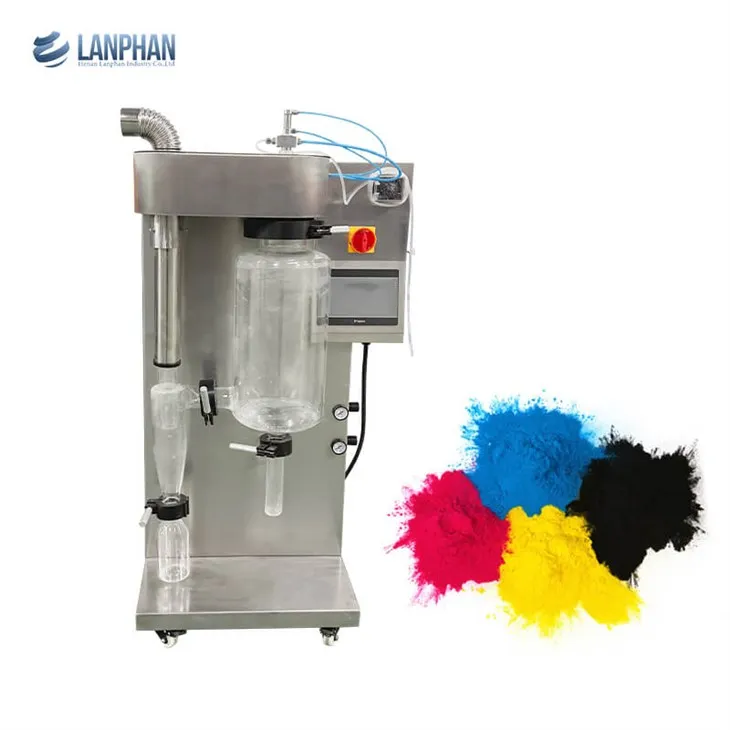

Hot air drying is the most common method used in lab spray dryers. It involves passing hot air through the drying chamber to evaporate the moisture from the liquid material. This method is relatively simple and cost-effective, but it may not be suitable for heat-sensitive materials.
Freeze drying, also known as lyophilization, is a more gentle drying method that involves freezing the material and then removing the moisture by sublimation. This method is ideal for heat-sensitive materials and can preserve the biological activity and chemical properties of the material. However, it is more expensive and time-consuming than hot air drying.
Microwave drying is a relatively new technology that uses microwave energy to heat the material and evaporate the moisture. This method is fast and efficient, but it may not be suitable for all types of materials.
When choosing a lab spray dryer, it is important to consider the drying technology that is most suitable for your material and application. Our company offers lab spray dryers with different drying technologies, and our technical team can help you select the right one for your needs.
3. Particle Size and Distribution
The particle size and distribution of the dried powder are important factors to consider, especially in industries such as pharmaceuticals and food. The particle size can affect the solubility, bioavailability, and stability of the product, while the particle size distribution can affect the flowability and packing density of the powder.
Most lab spray dryers allow you to control the particle size and distribution by adjusting the operating parameters, such as the inlet air temperature, feed rate, and atomization pressure. However, the range of particle sizes that can be achieved may vary depending on the design and capabilities of the dryer.
Our lab spray dryers are designed to produce powders with a narrow particle size distribution and a controlled particle size. We use advanced atomization technology and drying techniques to ensure that the particles are uniform in size and shape. Our technical team can also provide you with guidance on how to optimize the operating parameters to achieve the desired particle size and distribution.
4. Material Compatibility
The material compatibility of the lab spray dryer is another important factor to consider. The dryer should be made of materials that are compatible with the material you are drying to prevent contamination and ensure the quality of the product.
Some common materials used in lab spray dryers include stainless steel, glass. Stainless steel is a popular choice because it is durable, corrosion-resistant, and easy to clean. Glass is also a good option for some applications because it is transparent and allows you to observe the drying process.
When choosing a lab spray dryer, it is important to consider the material compatibility of the dryer and the material you are drying. Our company offers lab spray dryers made of different materials, and our technical team can help you select the right one for your needs.
5. Ease of Use and Maintenance
The ease of use and maintenance of the lab spray dryer are also important factors to consider. The dryer should be easy to operate and clean to minimize downtime and ensure the efficiency of the process.
Most lab spray dryers come with user-friendly interfaces and controls that allow you to adjust the operating parameters and monitor the drying process. However, the level of automation and complexity may vary depending on the model and manufacturer.
In addition, the dryer should be easy to disassemble and clean to prevent the buildup of material and ensure the quality of the product. Some lab spray dryers come with self-cleaning features or easy-to-remove parts that make cleaning and maintenance easier.
Our lab spray dryers are designed to be easy to use and maintain. We provide user manuals and training to help you operate the dryer effectively, and our technical support team is available to assist you with any questions or issues you may have.
6. Cost and Budget
The cost and budget are also important factors to consider when choosing a lab spray dryer. The cost of the dryer will depend on the capacity, throughput, drying technology, and features of the model.
It is important to balance the cost of the dryer with the quality and performance of the equipment. While it may be tempting to choose a cheaper dryer, it may not meet your needs or provide the desired level of performance. On the other hand, a more expensive dryer may offer additional features and capabilities that are worth the investment.
Our company offers a range of lab spray dryers at different price points to meet the needs and budgets of our customers.
Conclusion
Choosing a suitable lab spray dryer is a critical decision that can have a significant impact on the quality and efficiency of your production process. By considering the factors discussed in this blog post, you can select a dryer that meets your specific needs and requirements.
If you have any questions or need further information about our lab spray dryers, please do not hesitate to contact us. Our technical team is available to provide you with guidance and support, and we can help you choose the right dryer for your application. We look forward to working with you and helping you achieve your production goals.
References
- Perry, R. H., & Green, D. W. (Eds.). (2007). Perry's Chemical Engineers' Handbook. McGraw-Hill.
- Masters, K. (1991). Spray Drying Handbook. John Wiley & Sons.
- Mujumdar, A. S. (Ed.). (2007). Handbook of Industrial Drying. CRC Press.